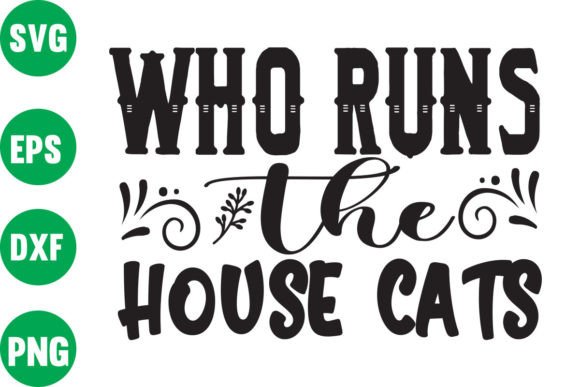
Who Runs the House Cats
As a designer and embroidery product reviewer, I often find myself evaluating digital files for real-world use. Who Runs the House Cats is one such design that caught my attention for its playful theme and versatility. The SVG file is clean, well-structured, and offers a range of applications for custom apparel, home decor, and more.
The First Impression
Who Runs the House Cats immediately evokes a sense of whimsy and humor. The design features a simple yet expressive cat with a bold, stylized look. The layout is balanced, making it suitable for a variety of projects without feeling cluttered or overwhelming. The shape and visual personality of the design suggest it belongs in a casual, fun setting—perfect for personalized gifts or handmade products that aim to charm rather than impress with complexity.
The detail level is moderate, with enough definition to work well in machine embroidery but not so intricate that it becomes impractical for most users. It’s ideal for a design that needs to translate clearly across different fabric types and embroidery techniques.
Real-Life Embroidery Performance
Using Who Runs the House Cats on a custom tote bag design was straightforward. The design worked well with a medium-sized hoop, allowing for easy placement and stitching. The stitch density is appropriate for most standard embroidery machines, and the file format makes it easy to adjust if needed.
For sweatshirt embroidery, the design maintains its clarity without becoming too dense. It’s a good fit for both light and dark fabrics, though thread color contrast is important to ensure visibility. On a baby onesie, the design looks cute and unobtrusive, fitting the soft, playful aesthetic of children’s clothing.
As an embroidered patch, Who Runs the House Cats holds up well, especially when using satin stitch for the outlines and fill stitch for the body. It’s also suitable for aprons, kitchen towels, and other home goods where a subtle, recognizable design is key.
Where to Use With Caution
While versatile, there are situations where Who Runs the House Cats may not perform as well. On small hoop sizes, the design might feel cramped, requiring careful placement to avoid distortion. For textured fabrics or thin materials, the design could lose some definition, so a proper stabilizer is essential.
On stretchy fabrics, the design may pucker slightly if not properly stabilized. Dark fabrics can also pose a challenge if the thread color doesn’t contrast well. For curved surfaces like caps, the design may need slight adjustments to maintain its shape during stitching.
Detailed corners and tiny lettering are not part of this design, which is a relief. It avoids the pitfalls of overly complex elements that can cause issues in machine embroidery. However, if you plan to use it for layered garments or products that require frequent washing, be sure to test it first.
Impact on Visual Appeal and Customer Perception
Who Runs the House Cats adds a friendly, approachable vibe to any project. Its simplicity makes it easy to incorporate into a brand’s visual identity, whether for a craft business or a small shop product. As a handmade product, it enhances the appeal of personalized gifts and custom apparel, offering a touch of character that customers appreciate.
From a commercial embroidery standpoint, the design is reliable. It translates well into printable mockups and digital product previews, helping Etsy sellers and craft entrepreneurs showcase their work effectively. The design assets are clear and functional, supporting both personal and commercial use.
For buyers, the design feels professional yet accessible. It’s a good choice for gift items, holiday embroidery, or boutique branding. Its recognizable style helps with brand consistency and makes it easier for customers to identify and trust the quality of the finished product.
Practical Designer Notes
Before committing to a project, I always recommend testing Who Runs the House Cats on scrap fabric. This helps assess how the design looks in different thread colors and fabric textures. Checking the stitch density is also important to ensure it works well with your machine and stabilizer setup.
Confirming the correct hoop size is essential, especially if you're working on larger or more detailed projects. Inspecting small details like the cat’s eyes and whiskers can make a big difference in the final outcome. Testing the design in black and white mockups helps evaluate its versatility across different backgrounds.
When using the design for commercial purposes, be sure to check the licensing terms before selling finished items or digital products. For craft businesses and Etsy sellers, this is a critical step to avoid legal issues down the line.
Conclusion: A Fun and Functional Design
Who Runs the House Cats is a solid choice for designers looking for a playful, adaptable embroidery file. It fits well into a range of projects, from custom apparel to home decor, and offers a balance between simplicity and visual appeal. While it requires some care in certain applications, its overall performance makes it a valuable addition to any embroidery project or digital product library.